
Article | Dispute of Futures – A Report on the Event Between the Environmental and the Digital: Toward COP30 |
Dispute of Futures – A Report on the Event Between the Environmental and the Digital: Toward COP30
Document prepared by Gabriela Vergili
Acknowledgments
We are grateful for the Heinrich Böll Foundation and its team for supporting the development and communication of the event and for providing the space that made it possible. We also thank the Instituto Clima e Sociedade (iCS) for fostering the debate at the intersection of digital and environmental rights.
We express our gratitude to Polinho Mota, from Data_Labe, and Marcelo Montenegro, from the Heinrich Böll Foundation, for their rich contributions to the discussion panel, which were central to sparking the event’s debates.
We thank Jessica Siviero and Junior Aleixo (ActionAid), Solon Veloso (Alma Preta), Igor Rolemberg (CPDA), Leonardo Montel, Marilene de Paula, Mayara Costa, Michael Alvarez, Regine Schönenberg and Valentina Avelluto (Heinrich Böll Foundation), Zeilane Conceição (Nupef), Gaio Paiva (Rio de Janeiro City Hall), Natane Santos (UFRJ), Cleber Ribeiro (Uniperifas), and Victória Teixeira (Visão Coop) for their attentive listening, generosity, and willingness to share their knowledge and experiences, thus strengthening exchanges within this complex intersection between environmental and digital spheres.
Event Proposal
The event “Between the Environmental and the Digital: Toward COP30” is part of the project “Climate, Land Use, and Data Flows: Reconciling Individual and Collective Rights” developed by Data Privacy Brasil, with support from the iCS. The event seeks to connect experts from the fields of environmental protection and climate change mitigation with advocates for digital rights, focusing on topics relevant to COP30.
Over recent years, Data Privacy Brasil has dedicated efforts to issues involving public transparency, personal data, and socio-environmental impacts. During this period, we identified the importance of expanding transparency over datasets regarding environmental and other related topics, as well as the ratification of the Escazú Agreement, as important steps to strengthen local legislation for environmental protection, access to information, social accountability, and the protection of environmental defenders.
Linking public databases necessary for more effective territorial monitoring is another step that would contribute to environmental protection. Such integration would improve data quality and transparency, making information more accessible. In this regard, digital public infrastructure (DPI), which depends on interoperability and is guided by public value, can provide a path toward integrating and enhancing cooperation among agencies to strengthen compliance with environmental legislation.
However, digital technologies are not always the best solution. For this reason, we decided to include in the event a discussion on the impact of these tools. Whether implemented for environmental protection—as could be the case for PDI—or for broader use, technologies have significant environmental impacts. These impacts appear to have been accelerated by data centers built to support artificial intelligence.
All of these themes have a place at COP30—both in demonstrating the importance of data and access to information, research development, and social oversight for environmental protection, and in highlighting the need for caution to ensure that technological use is truly effective.
Opening Activity
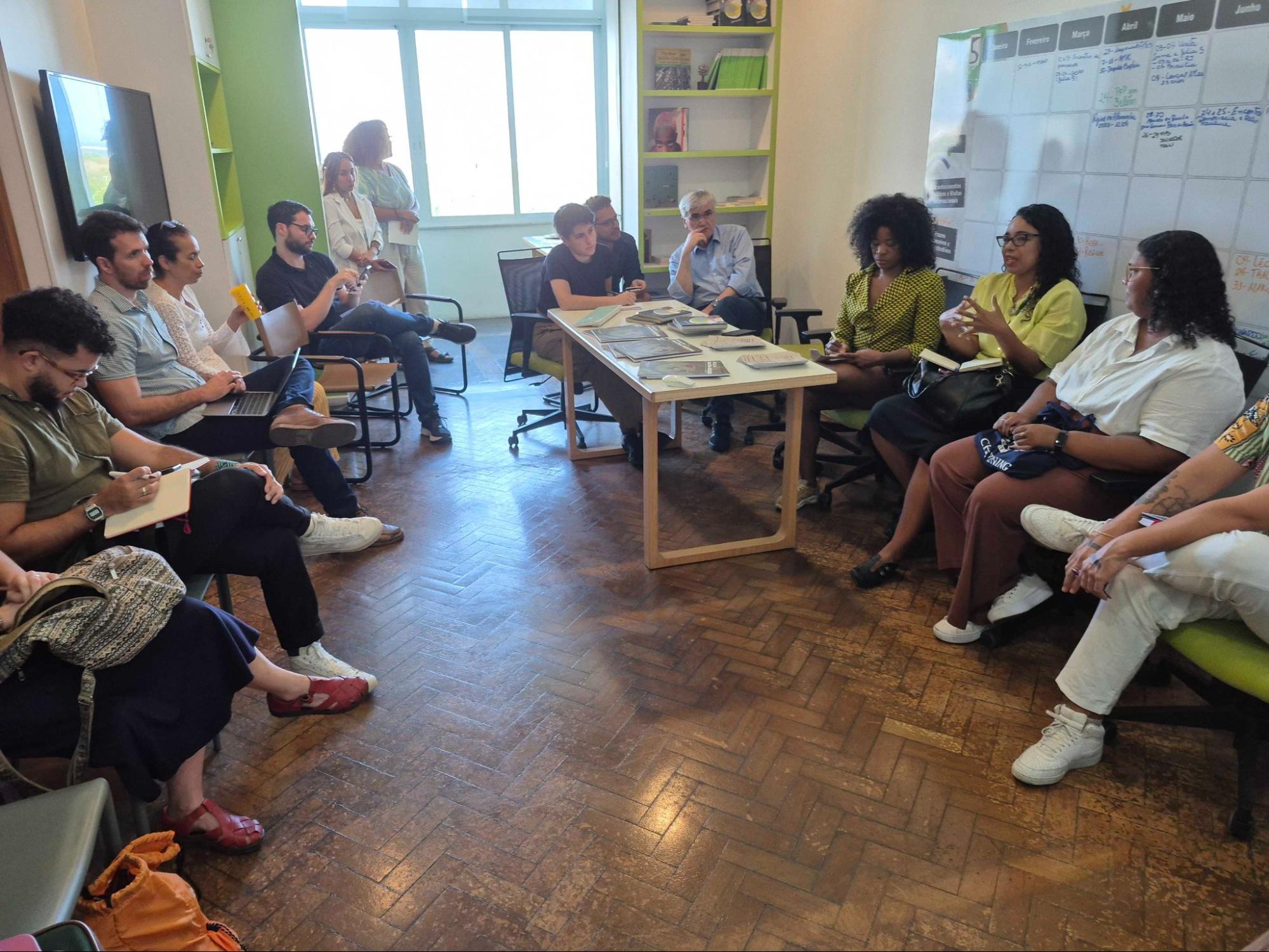
The event opened with an activity led by Johanna Monagreda, a researcher at Data Privacy Brasil. It served simultaneously as an introductory round of presentations and a moment for participants to exchange initial reflections on how they perceive the connections between technology, personal data processing, and the environment.
This first conversation circle explored topics such as asymmetries and environmental racism, the benefits and challenges of connectivity in communities, data processing by artificial intelligence, public transparency, and access to information.
The starting point was the recognition that access to digital technologies is a political choice made by local authorities. Asymmetries begin with the lack of infrastructure enabling access—for example, the absence of internet towers or cabling.
This lack of access shifts priorities. A person deprived of access to certain technologies tends not to worry about their impact—such as the protection of their personal data—because access itself becomes the more urgent concern. In this sense, participants pointed out a shift away from using the term “environmental racism,” increasingly replaced by concepts such as “climate justice” or “socio-environmental justice”—terms considered more palatable but which dilute the necessary denunciation.
Given disparities that exist even within the same neighborhood, when dealing with territorial or community-specific issues, seeking homogeneous solutions prevents the development of effective answers and strips local populations of agency to decide what needs to be done.
Decision-making, strategy identification, and the filing of complaints or social oversight actions towards public administration—aimed at protecting their territory, community, and the environment—often depend on public data. These include personal data that serve the public interest, such as those contained in the Rural Environmental Registry (CAR), the Animal Transit Warrent (GTA), the Land Management System (Sigef), among others.
Panel: AI, Climate Change Mitigation, and Environmental Impact
The Panel
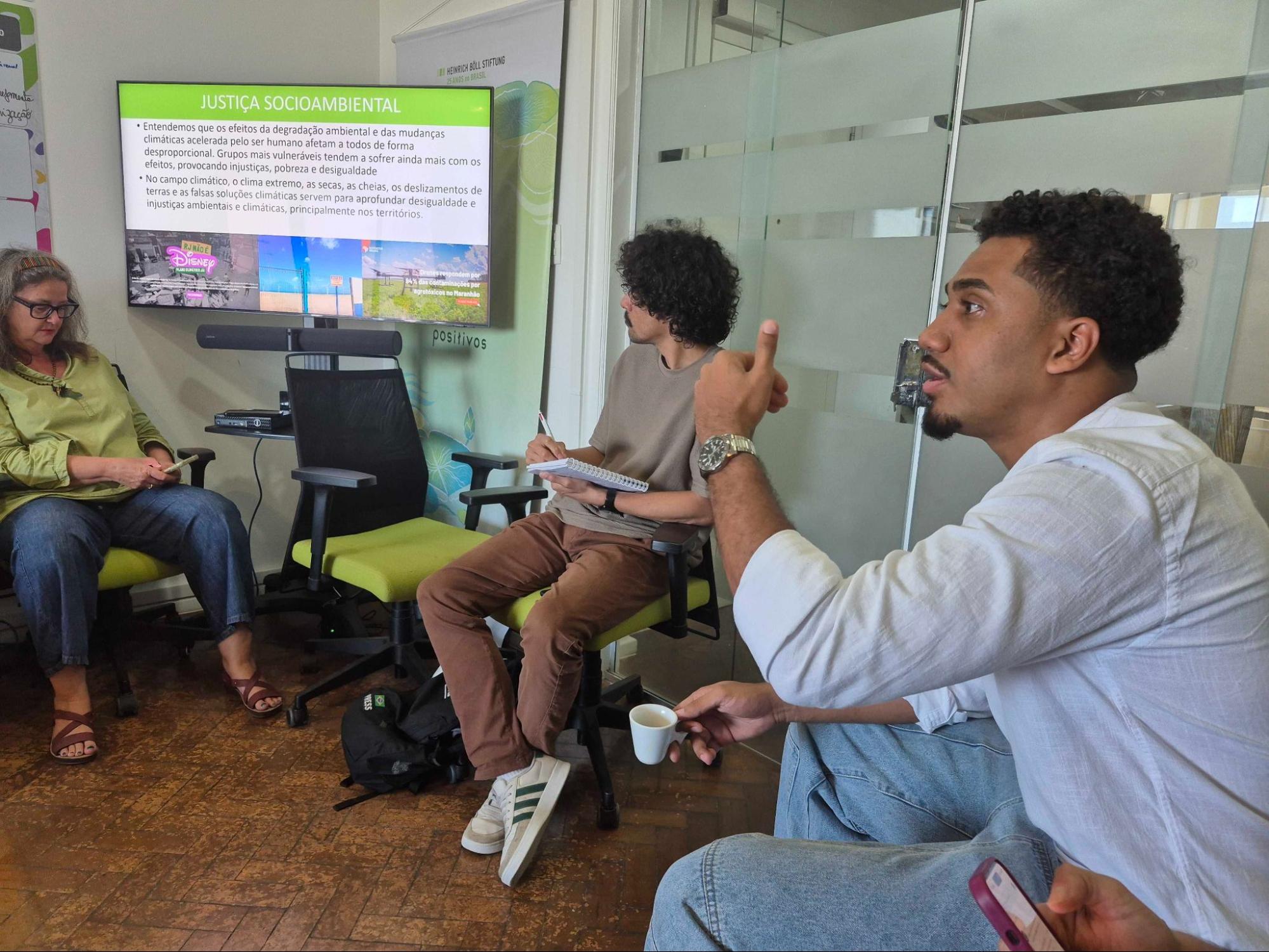
The panel “AI, Climate Change Mitigation, and Environmental Impact”, mediated by Pedro Saliba, Data Privacy Brasil coordinator, sought to balance reflections on the risks and benefits of technological implementation in socio-environmental contexts.
The first speaker was Marcelo Montenegro, from the Heinrich Böll Foundation, who addressed the following questions:
- In recent years, we have seen concerns about socio-environmental justice emerging across diverse topics. How has the Böll Foundation perceived this movement?
- Techno-politics–related themes are also affected by socio-environmental issues. Could you share some key points you consider important in this regard?
Marcelo stressed the impact of inequality when facing the effects of environmental degradation and resulting climate change. In this context, technologies that may threaten territories—from surveillance to the application of pesticides, for instance—interfere even more severely with local realities. This situation is exacerbated by the intense lobbying of sectors such as fossil fuels and by climate financing that currently fails to focus on proposals that foster climate justice, instead channeling funds into private-sector projects that sometimes worsen environmental damage and harm local communities.
Considering the variety of digital technologies implemented as innovation—such as the platformization of food systems, the increased use of drones in agricultural production, new energy sources, among others—it is important to critically examine technosolutionism and the search for hegemonic answers that distance us from connections with territories, communities, and traditional knowledge, which must also be recognized as innovation, not outdated techniques.
Montenegro concluded by emphasizing the importance of rethinking technological solutions based on what our relationship with nature should be, and how the continued separation between the artificial and the natural will only deepen injustices.
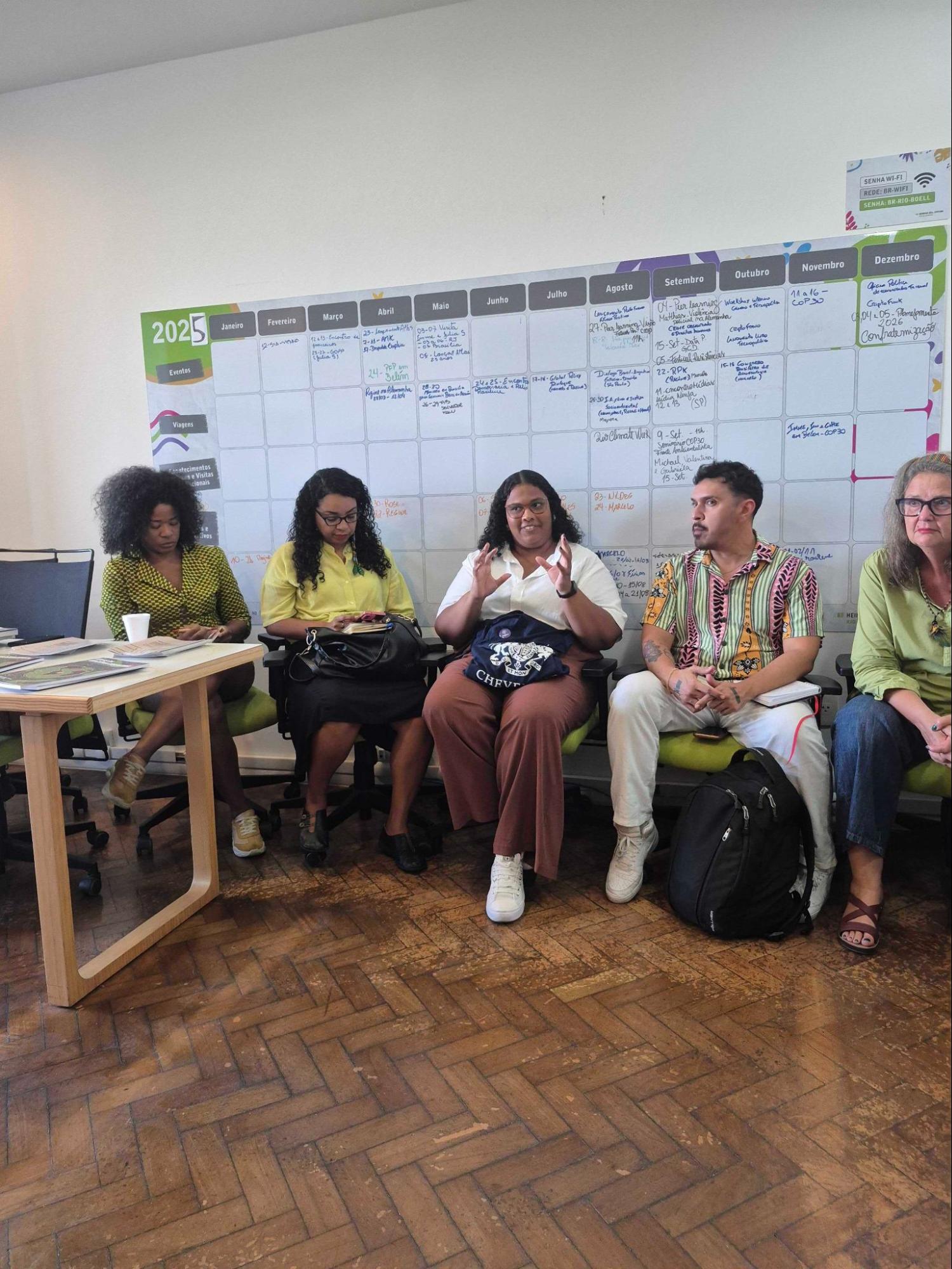
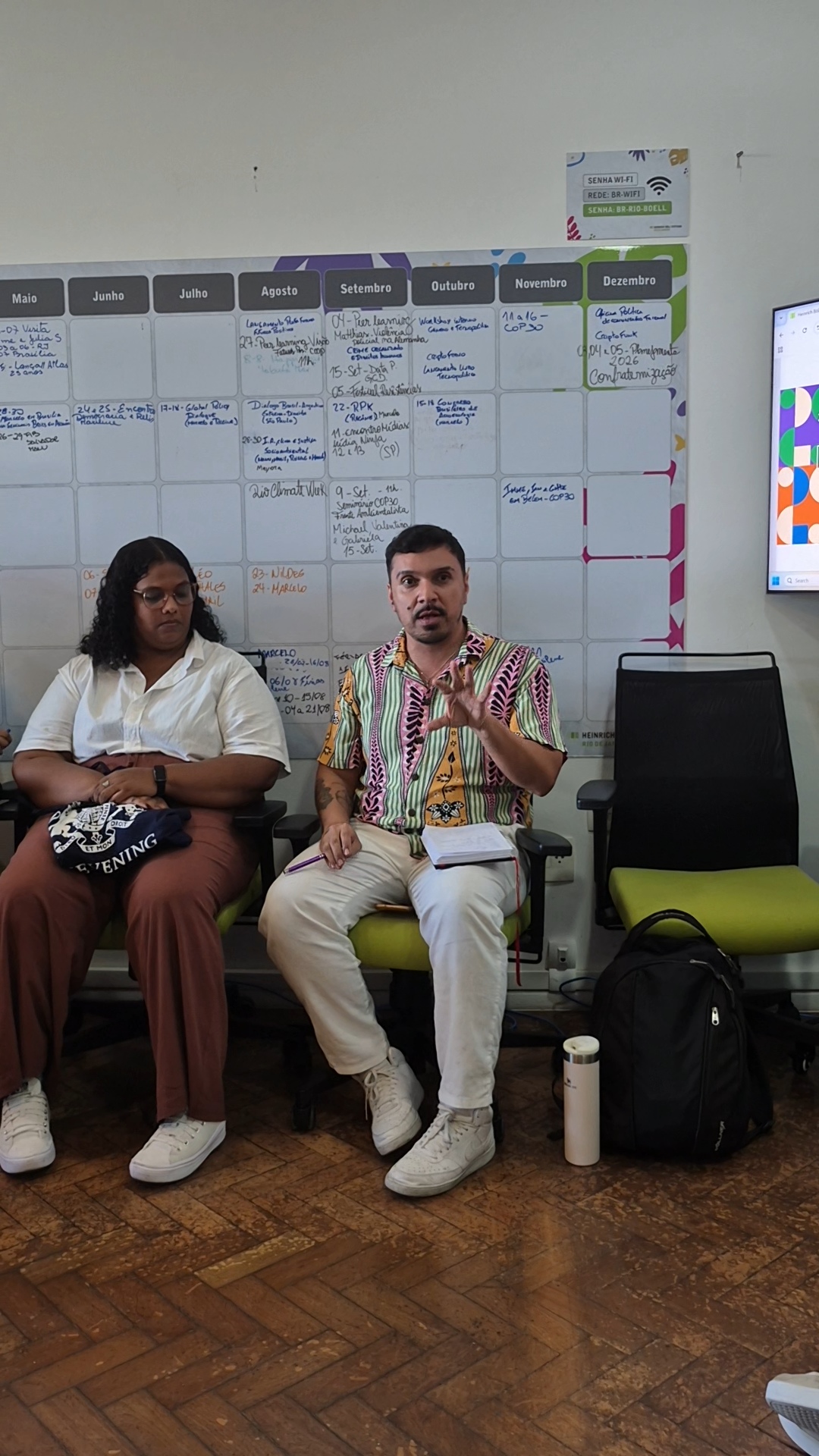
Polinho’s contribution centered on:
- How activists already use or can use digital technologies in the fight for socio-environmental justice;
- The risks AI may pose to territories;
- The role of data in building collective efforts for human rights, both on digital platforms and within territories.
Polinho highlighted the role of civil society as a driver of “life projects”—initiatives meant to strengthen and preserve individuals’ existence. Examples include Data_Labe’s Põe na Mesa, which aims to create a network of community gardens that were previously isolated initiatives, and Quilombo sem Lixo, soon to be launched, which seeks to bring public attention to inadequately managed waste in quilombola territories. These projects are either community-led or developed through listening processes that identify each community’s needs, involving residents in both design and execution. Technology, in this sense, becomes a tool to unite communities themselves.
These life projects stand in opposition to “death projects” that disregard local demands, excluding or endangering populations—especially marginalized groups. In the context of technology, an example is the implementation of data centers, where the most profitable route is often chosen without considering impacts on land and local communities.
This disregard for local realities is also embedded in technology. Artificial intelligence, by design, seeks patterns and favors homogenized visions of reality—often resulting in the erasure of entire groups. Civil society becomes exhausted when trying to stop “death projects,” which often yield limited results. More impact is achieved by channeling energy toward life projects that counteract homogenization and guide technology to meet specific needs.
Open Debate
When the floor was opened for discussion, participants revisited some points touched upon during the opening activity.
Regarding physical infrastructure, it was noted that the absence of infrastructure—which should have been provided by the government—opens opportunities for stronger interventions by private actors with territorial interests, such as companies installing satellite internet points.
In addition to infrastructure gaps and political-economic interests that hinder implementation of projects that truly serve communities, there are also difficulties in maintaining initiatives due to technological failures. Solutions introduced too quickly or in emergencies are not always implemented with consideration of technological defects, repair and maintenance costs, or regional peculiarities that may affect performance—such as climate factors, connectivity, or energy networks. This relates to technological impact: meaningful planning must consider the best use of technology, rather than relying on technosolutionism. It is about ensuring that installation and use are significant and beneficial.
In this context, the participation of at least local leaders is essential to adapt projects and foster a sense of belonging. Likewise, when communities can identify, name, and denounce environmental racism, they also strengthen their sense of belonging, protection, resistance, and clarity in their demands—whether to propose or organize initiatives or to block harmful private or governmental interventions.
Next Steps for Collective Action
There remains significant room to foster and strengthen relationships between civil society organizations focused on environmental protection and those dedicated to defending digital rights. Fortunately, this process has been underway for some time, and many organizations already engage with issues that lie at the intersection of these two fields.
Within this context—across all sectors—there is a dispute over futures marked by an imbalance between political-economic interests and socio-environmental interests. It is up to civil society to steer the use of digital technologies so that they are effective, meaningful, useful, and positively impactful.
The bridge between the environmental and the digital must be built upon principles such as transparency, accountability, and maximum publicity. In this sense, open and interoperable databases that respect personal data protection rights are indispensable tools for managing and analyzing socio-environmental information—and, above all, for exercising civic participation and social oversight in the pursuit of sustainability.
DataPrivacyBr Research | Content under licensing CC BY-SA 4.0