
COP30, Data and Land Use: Discussing Agendas to Combat Land Grabbing
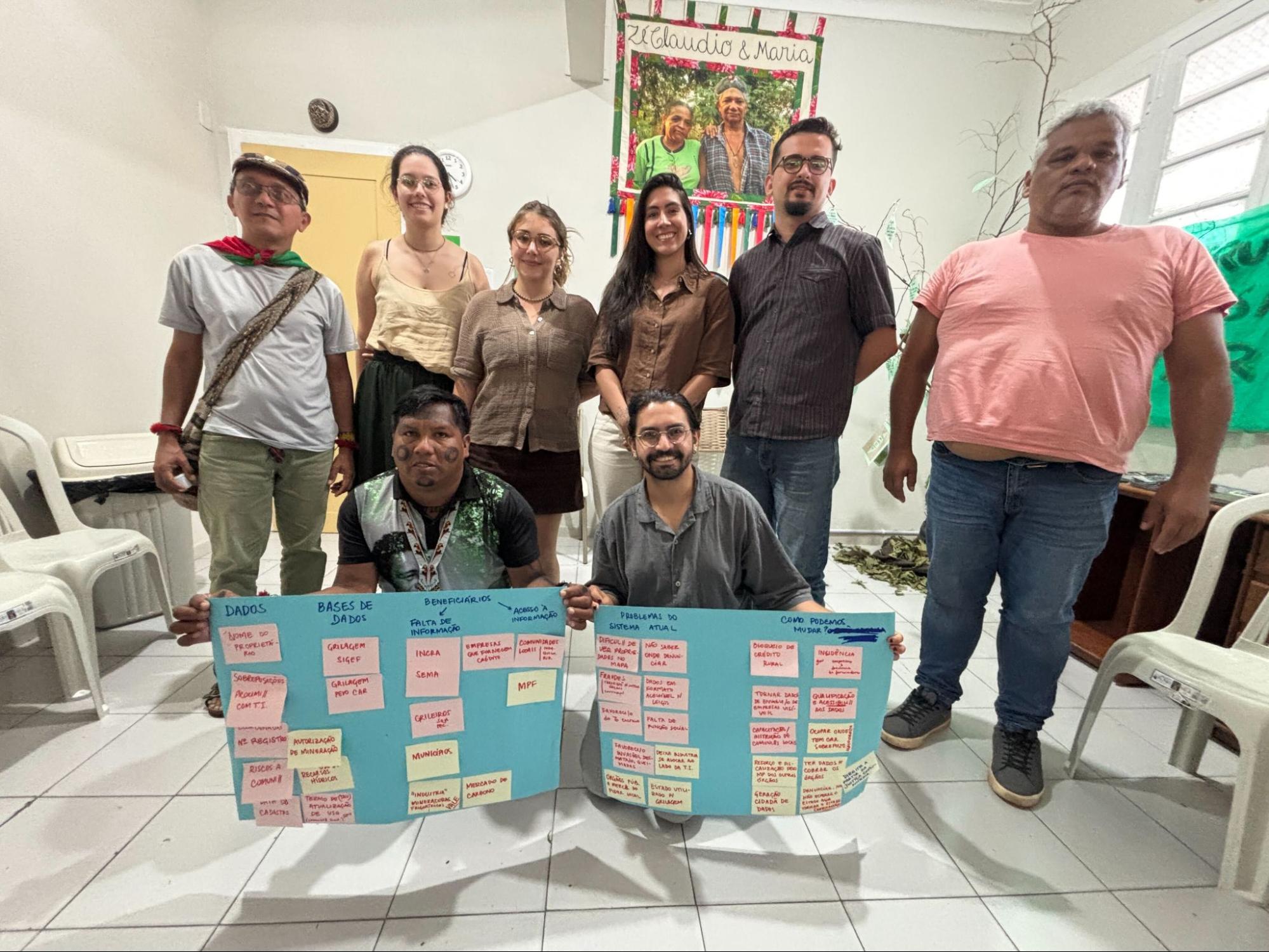
On November 12, 2025, Data Privacy Brasil held a roundtable discussion on data and land grabbing as part of the COP do Povo program, a parallel event to COP30, entitled "COP30, Data and Land Use: Discussing Agendas to Combat Land Grabbing,".
On November 12, 2025, Data Privacy Brasil held a roundtable discussion on data and land grabbing as part of the COP do Povo program, a parallel event to COP30. Entitled “COP30, Data and Land Use: Discussing Agendas to Combat Land Grabbing,” the roundtable aimed to be a space for exchange among civil society on the importance of public transparency of personal data to strengthen the fight against deforestation and land grabbing and to guarantee territorial justice, placing the discussion within the context of COP30 and considering future agendas. This is part of the activities planned for the project “Climate, Land Use and Data Flow: Reconciling Individual and Collective Rights,” developed by Data Privacy Brasil with support from the Climate and Society Institute.
This event is a consequence of observations made in research over the past few years regarding the importance of public transparency of environmental data, including certain personal data. Transparency is essential to balance an extremely unequal scenario, marked by violence and violations of the rights of local communities. And it seems relevant to discuss it in light of the serious problem of land grabbing in Brazil and within the context of COP30.
To see more details about the discussion that took place at the event, simply click here to read the full report.
Veja também
-

Brazil’s Expanding Surveillance System: Security at the Cost of Privacy?
From facial recognition in public spaces to citizen reporting apps and private-sector image sharing, Brazil is moving toward a broader surveillance ecosystem, raising questions about who is being watched, who controls the data, and what safeguards are in place.
-

COP30: Why local communities must have access to environmental information in data center development
At COP30, Brazil speaks of reforestation and indigenous wisdom. But Bruno Bioni, Mariana Rielli, and Rafael Zanatta argue that the country’s generous tax incentives for data centers must be tied to the collective right of access to environmental information, or risk deepening the very injustices the climate summit seeks to undo.
-
COP30 Dialogues: Interview with Antônio Laranjeira
In the second interview for our special series “COP30 Dialogues: Digital Rights and Climate Justice,” we spoke with Antônio Laranjeira, an award-winning journalist for investigative reporting on topics such as environmental loss and damage, science, and citizenship.
-

COP30 Dialogues: Interview with Lori Regattieri
Data Privacy Brasil launches the new interview series “COP30 Dialogues: digital Rights and Climate Justice,” aiming to hear diverse voices on the interface between the climate agenda and digital rights. The new project emerges in a unique year: the first United Nations Climate Change Conference (COP30) in Brazil.
-
Why public transparency on certain personal data is essential to guarantee environmental justice?
Between 2022 and 2023, Data Privacy Brasil developed the project Environment and Information: contesting the political instrumentalization of LGPD in Environmental Regulation which focuses on the intersection of digital rights and environmental policies.
-
Digital Public Infrastructures & Digital Public Goods for Combating Climate Change: The Brazil Case Study
Data Privacy Brasil, with the support of the Digital Public Goods Alliance (DPGA), launches a new report that aims to analyze the integration between Digital Public Infrastructure (DPI) and Digital Public Goods (DPGs) as tools to combat climate change.
-
Transparent monitoring for sustainability through DPIs
In this new publication, researchers Gabriela Vergili, Pedro Saliba from Data Privacy Brasil, Vinay Narayan and Soujanya Sridharan from Aapti Institute, discuss the “Transparent monitoring for sustainability through DPIs”.
Veja Também
-
Brazil’s Expanding Surveillance System: Security at the Cost of Privacy?
From facial recognition in public spaces to citizen reporting apps and private-sector image sharing, Brazil is moving toward a broader surveillance ecosystem, raising questions about who is being watched, who controls the data, and what safeguards are in place.
-
COP30 Dialogues: Interview with Antônio Laranjeira
In the second interview for our special series “COP30 Dialogues: Digital Rights and Climate Justice,” we spoke with Antônio Laranjeira, an award-winning journalist for investigative reporting on topics such as environmental loss and damage, science, and citizenship.
-
COP30 Dialogues: Interview with Lori Regattieri
Data Privacy Brasil launches the new interview series “COP30 Dialogues: digital Rights and Climate Justice,” aiming to hear diverse voices on the interface between the climate agenda and digital rights. The new project emerges in a unique year: the first United Nations Climate Change Conference (COP30) in Brazil.
-
Why public transparency on certain personal data is essential to guarantee environmental justice?
Between 2022 and 2023, Data Privacy Brasil developed the project Environment and Information: contesting the political instrumentalization of LGPD in Environmental Regulation which focuses on the intersection of digital rights and environmental policies.
-
Digital Public Infrastructures & Digital Public Goods for Combating Climate Change: The Brazil Case Study
Data Privacy Brasil, with the support of the Digital Public Goods Alliance (DPGA), launches a new report that aims to analyze the integration between Digital Public Infrastructure (DPI) and Digital Public Goods (DPGs) as tools to combat climate change.
-
Transparent monitoring for sustainability through DPIs
In this new publication, researchers Gabriela Vergili, Pedro Saliba from Data Privacy Brasil, Vinay Narayan and Soujanya Sridharan from Aapti Institute, discuss the “Transparent monitoring for sustainability through DPIs”.
-
Privacy, Public Transparency and Climate Change
How transparency and data protection can help environmental public policies in Brazil.

DataPrivacyBr Research | Content under licensing CC BY-SA 4.0