
Responsible AI and Workforce Impact: A Contribution to the MIT Sloan Management Review Debate
For the fifth consecutive year, MIT Sloan Management Review, in partnership with Boston Consulting Group, convened an international panel of experts to assess key questions in responsible artificial intelligence. The initiative brings together academics and practitioners to examine how AI governance is evolving across organizations. In his contribution, Bioni argues that a sociotechnical perspective on AI risk governance must encompass both the positive and negative impacts on the workforce.
For the fifth consecutive year, MIT Sloan Management Review, in partnership with Boston Consulting Group, convened an international panel of experts to assess key questions in responsible artificial intelligence. The initiative brings together academics and practitioners to examine how AI governance is evolving across organizations .
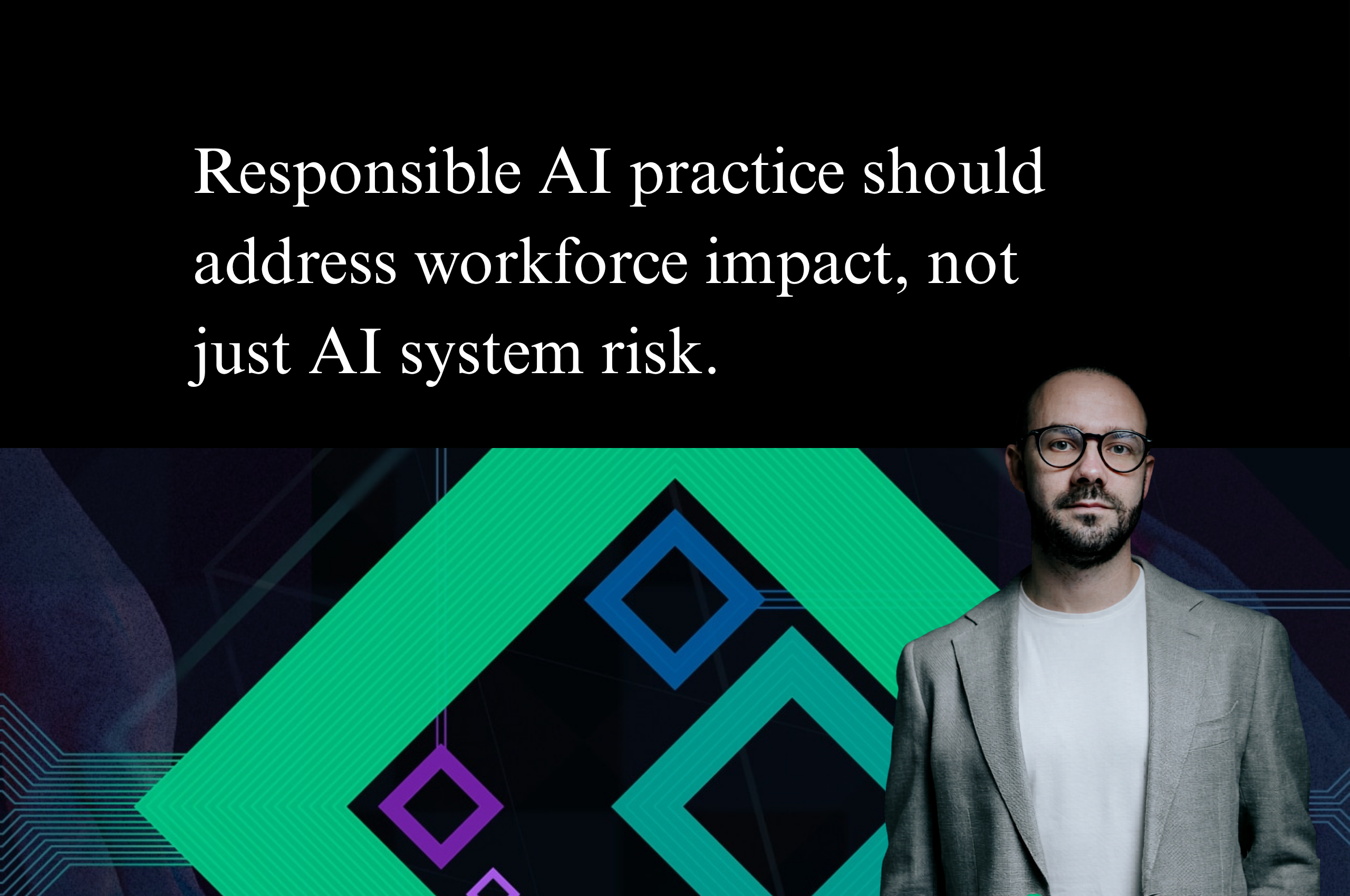
In the 2026 edition, the central question was whether responsible AI practices should address workforce impact, rather than focusing only on risks related to AI systems. The panel’s response indicates a clear direction: nearly 80% of participants agreed or strongly agreed with this proposition .
The discussion reflects a broader shift in the field. While earlier debates concentrated on issues such as bias, explainability, and safety, the current framing emphasizes that AI systems are already affecting how work is organized and experienced. As a result, governance approaches that focus exclusively on technical dimensions may be insufficient.
Within this debate, Bruno Bioni, founder and director of Data Privacy Brasil and a recurring participant in the panel, contributed a “strongly agree” position.
In his contribution, Bioni argues that a sociotechnical perspective on AI risk governance must encompass both the positive and negative impacts on the workforce. Otherwise, governance frameworks risk collapsing into a narrowly technocratic approach that neglects the social consequences of AI systems already unfolding across labor markets.
He also points out that policy discussions should move beyond a limited focus on job displacement. According to Bioni, it is necessary to consider how AI systems are reshaping work organization more broadly, including task fragmentation, algorithmic management, performance evaluation, and asymmetries of power between workers and firms.
As an example, he highlights digital labor platforms, where algorithmic systems do not merely automate tasks but actively govern working conditions. These systems define pricing, allocate shifts, rank workers, and enforce performance metrics.
From a Global South perspective, Bioni underscores the role of labor unions and worker associations. He notes that collective bargaining agreements can introduce safeguards such as prior consultation before AI deployment, access to information about automated decision-making systems, and limits on algorithmic surveillance.
The full article brings together a range of perspectives on how organizations can incorporate workforce impact into their responsible AI strategies.
Read the complete analysis on MIT Sloan Management Review.
Veja também
-
Artificial Intelligence, Sustainability and the Collective Right to Access Information
There are major questions concerning the development and use of Artificial Intelligence (AI) when assessing its socio-environmental impacts throughout its entire life cycle. This discussion opens the first thematic axis of the AI with Rights project — dedicated to raising awareness about the importance of Artificial Intelligence regulation in Brazil that is centered on citizenship and rights.
-
Regulation Won’t Hold Back AI Innovation in Brazil
The Brazilian Chamber of Deputies has until the end of the year to deliver a final report that could shape the future of Brazilian law. Legal regulation, however, cannot be the only republican response to the explosion in the use of AI systems. Learn more about Data Privacy Brasil’s position in the article below.
-
Common Horizons: The Role of Digital Public Infrastructure in Finance, Identity and Climate Justice
In 2024, Data Privacy Brasil held the event “Common Horizons: The Role of Digital Public Infrastructure in Finance, Identity and Climate Justice". To continue the discussions held during the event, Data launched a new report with the aim of reflecting the lessons learned during the tracks promoted at the meeting.
Veja Também
-
Artificial Intelligence, Sustainability and the Collective Right to Access Information
There are major questions concerning the development and use of Artificial Intelligence (AI) when assessing its socio-environmental impacts throughout its entire life cycle. This discussion opens the first thematic axis of the AI with Rights project — dedicated to raising awareness about the importance of Artificial Intelligence regulation in Brazil that is centered on citizenship and rights.
-
Common Horizons: The Role of Digital Public Infrastructure in Finance, Identity and Climate Justice
In 2024, Data Privacy Brasil held the event “Common Horizons: The Role of Digital Public Infrastructure in Finance, Identity and Climate Justice". To continue the discussions held during the event, Data launched a new report with the aim of reflecting the lessons learned during the tracks promoted at the meeting.

DataPrivacyBr Research | Content under licensing CC BY-SA 4.0