
Article | Community justice as a starting point for combating land grabbing – A report on the event COP30, data, and land use: discussing agendas to combat land grabbing |
Community justice as a starting point for combating land grabbing – A report on the event COP30, data, and land use: discussing agendas to combat land grabbing
Acknowledgments
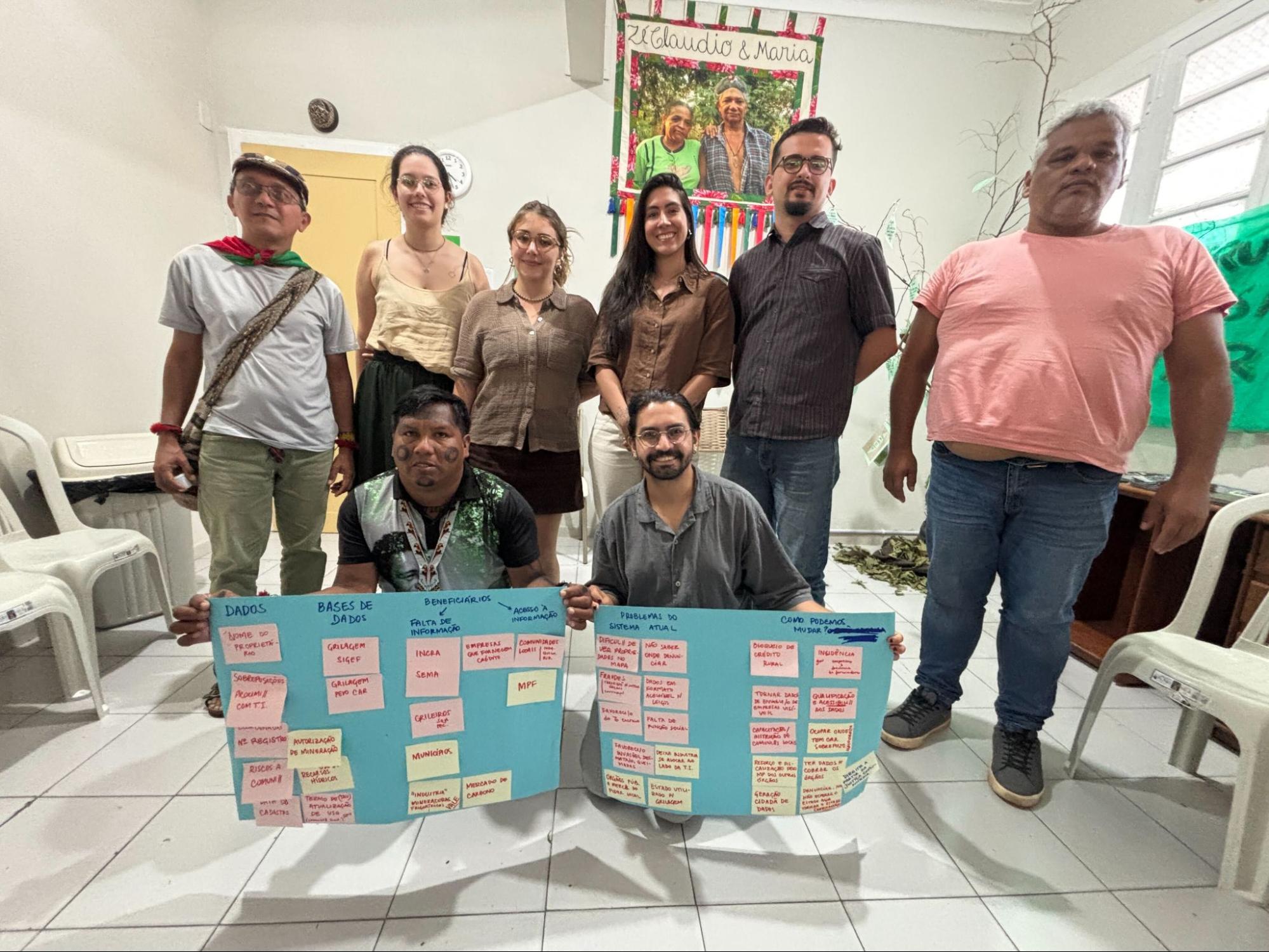
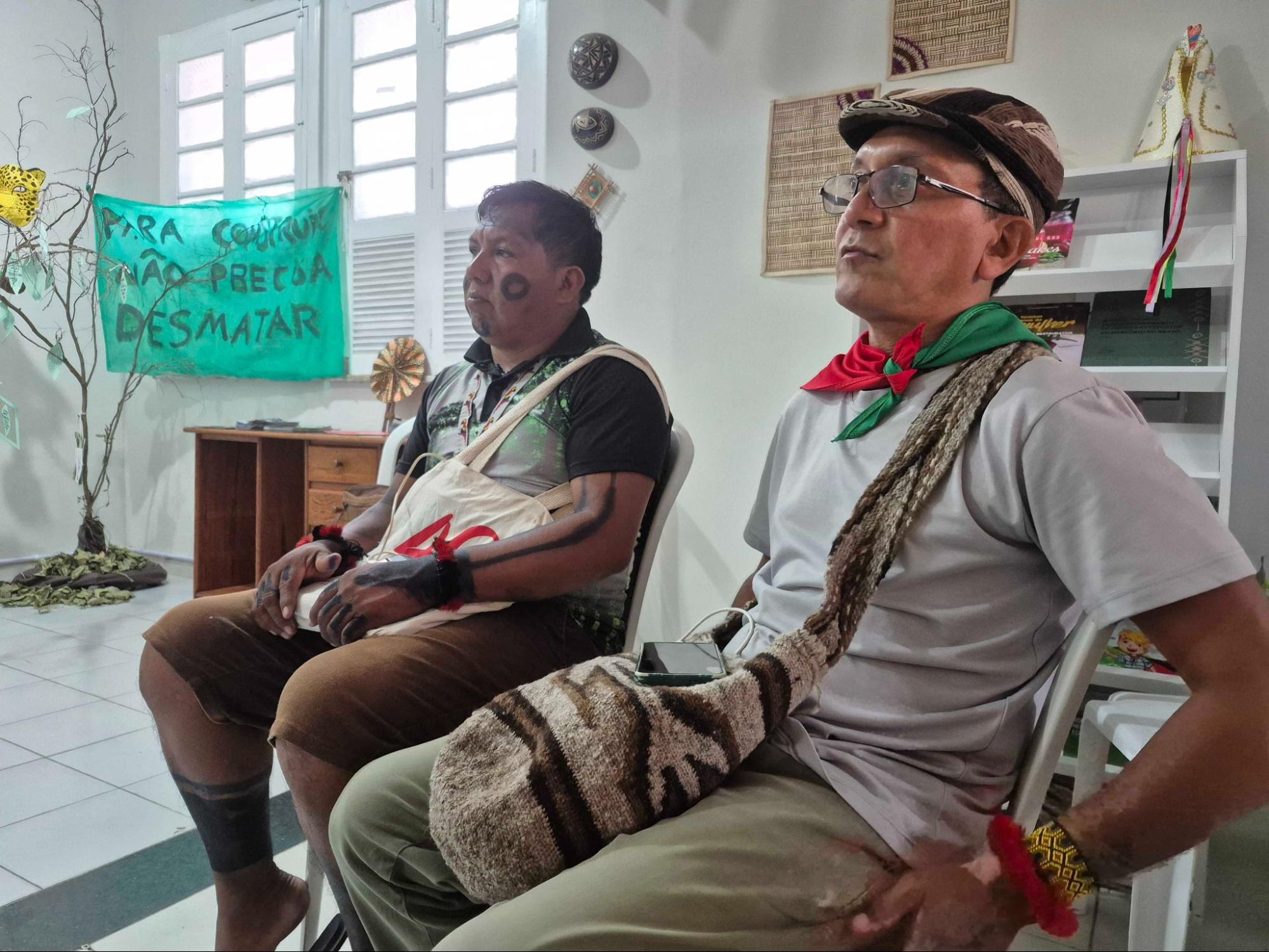
We thank Itahu Ka’apor and José Mendes (Centro Formação Saberes Ka’apor), Lincon Sousa and Luísa Falcão (Maparajuba), Luiz Cláudio Teixeira (Movimento Xingu Vivo), and Laura Carolina Vieira (researcher) for their willingness and generosity in actively participating in the conversation circle, sharing knowledge and experiences that were essential for a better understanding of the impacts of land grabbing. We also thank the COP do Povo for providing space in their program and for their support.
Event Proposal
The event “COP30, data and land use: discussing agendas to combat land grabbing” is part of the activities planned under the project “Climate, land use and data flows: reconciling individual and collective rights”, developed by Data Privacy Brasil with support from the Climate and Society Institute. The event took place at the People’s COP on November 12, 2025, in Belém, Pará, and aimed to create a space for exchange among civil society on the importance of public transparency of personal data to strengthen efforts against deforestation and land grabbing and to guarantee territorial justice, situating the discussion within the context of COP30 and future agendas.
The event stems from observations gathered over recent years through research on the importance of public transparency of environmental data, including certain types of personal data. Transparency is essential to balancing an extremely unequal landscape marked by violence and rights violations against local communities. It also appears particularly relevant in discussions on the serious issue of land grabbing in Brazil within the context of COP30.
Roundtable discussions
Dynamics
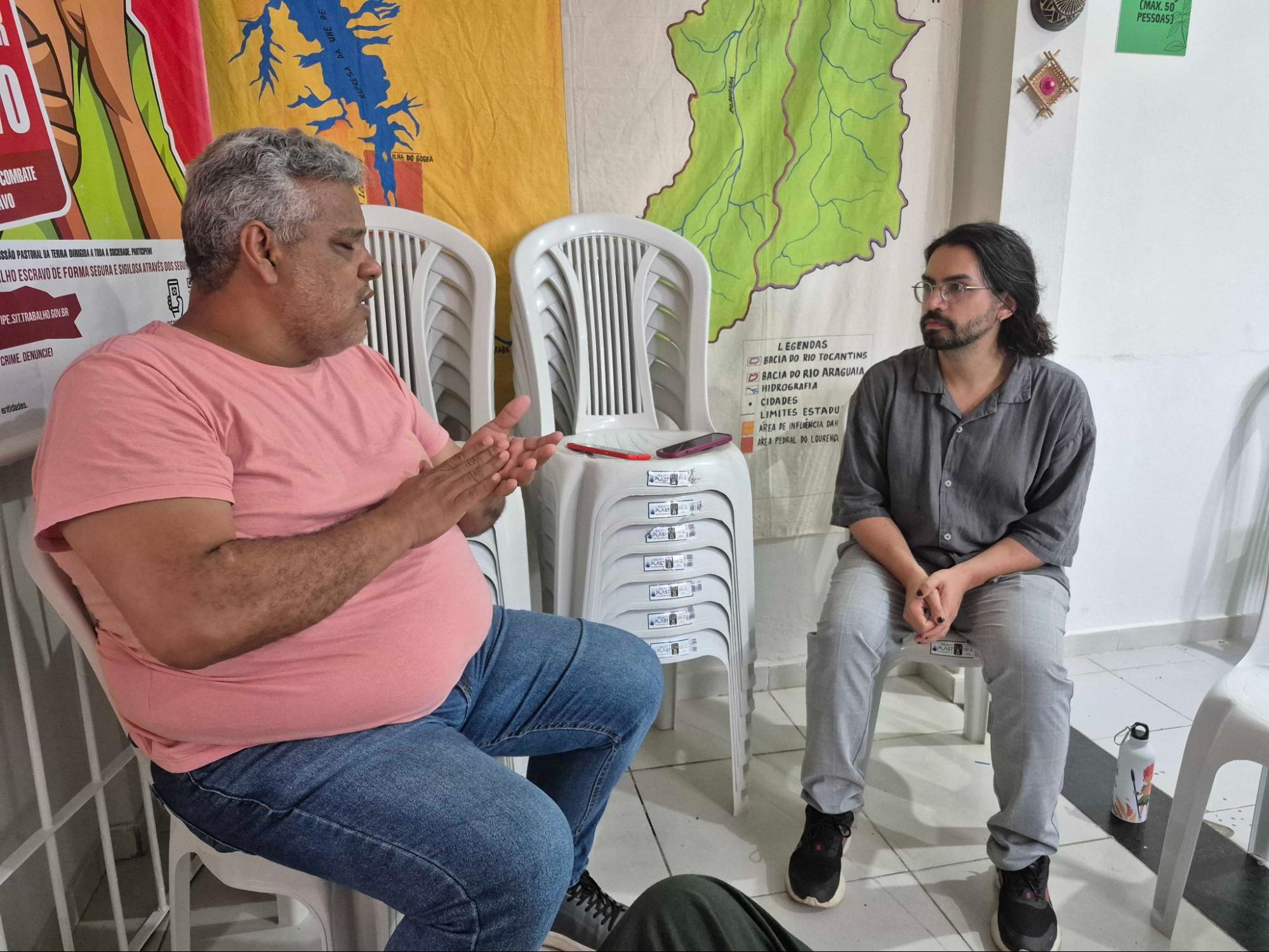
The event was structured as an open conversation circle with a base script, but unfolded according to participants’ contributions. The discussion lasted approximately 1 hour and 30 minutes and was mainly facilitated by Pedro Saliba, coordinator of the Asymmetry and Power area, with support from researcher Gabriela Vergili.
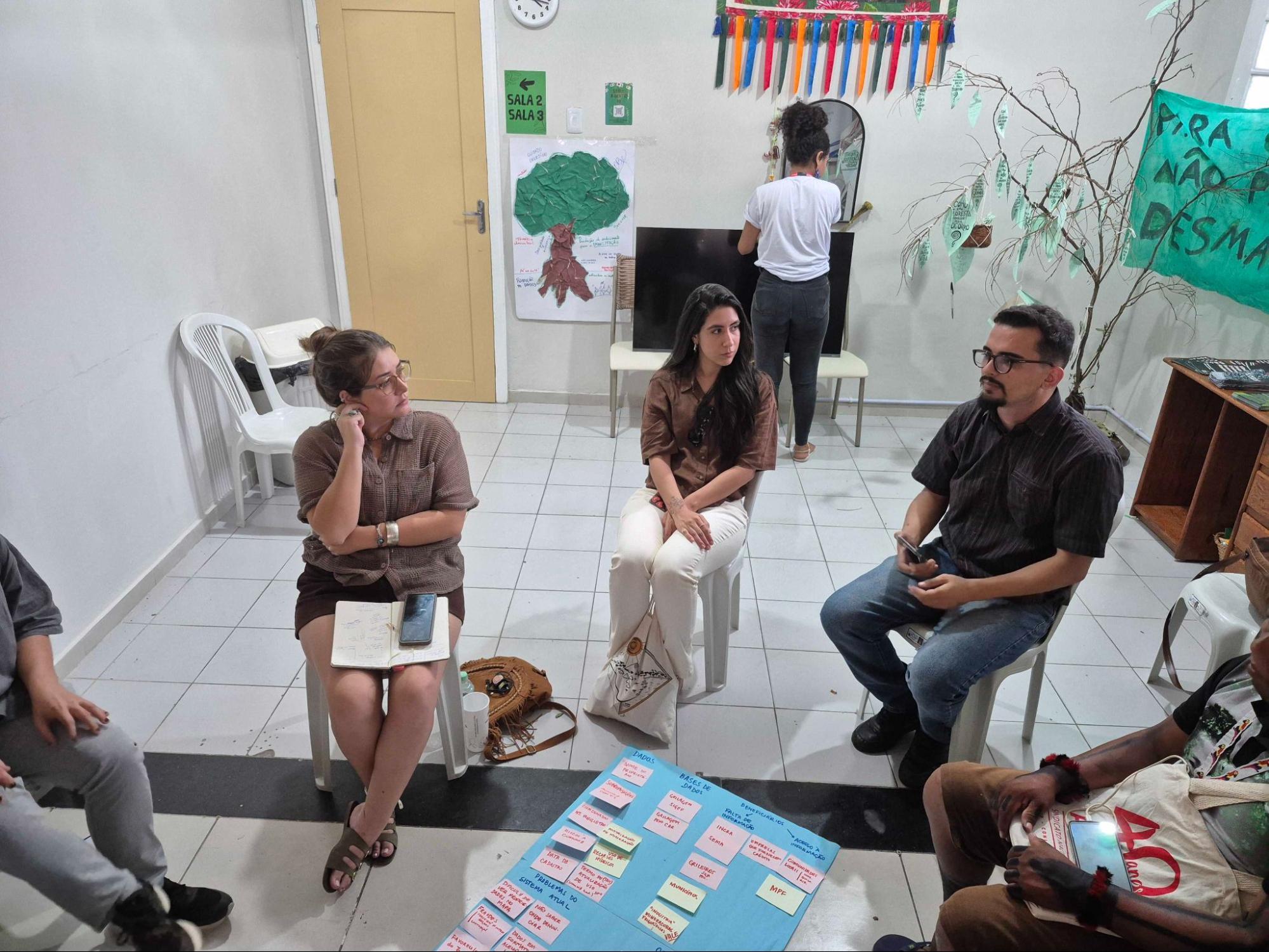
The initial goal was to understand participants’ relationship with land grabbing—whether they were directly impacted by it in their daily lives or whether they worked with the issue through research or activism. From there, the conversation moved toward transparency and digital rights, outlining a context in which relevant datasets for combating land grabbing were identified, along with beneficiaries of public transparency (and lack thereof), flaws in the current system, and ideas for how to change this scenario.
Relevant Data
During the conversation, the following types of information were mentioned as important: the landowner’s name; overlaps and proximity to Indigenous lands; coordinates and registration numbers of grabbed properties; dates of registrations; documentation such as mining authorizations and terms of use; and information about activities near Indigenous lands and communities—whether on grabbed land or not—such as risks posed to local populations and use of natural resources, including water consumption.
Problems in the Current System
Participants who experience the impacts and violence of land grabbing in their communities reported major difficulties in accessing information, especially due to the lack of accessibility in the systems, which are not user-friendly and provide no guidance on how to use them. At times, relevant data were inaccessible due to difficulties in identifying the correct information in documents, maps that were difficult to use to identify properties without precise coordinates, and the simple absence of transparency for certain information such as landowners’ names.
Beyond transparency issues, participants expressed deep concerns about corruption and the instrumentalization of state agencies to enable land grabbing. Fraud was a recurrent theme, along with distrust of public agencies at their local units, such as INCRA, due to insufficient oversight and outsourcing of services that facilitate corruption by allowing officials to manipulate registrations and confer an appearance of legality on grabbed land. This is a problem not only in the Rural Environmental Registry (CAR) but also in the Land Management System (SIGEF).
Because of this corruption, and the perception that state agencies are also subject to local power structures (industry, large landowners, and political leaders), it becomes difficult to identify where and how to report violations. The lack of trust has distanced traditional communities from public authorities that should protect them.
The resulting scenario favors practices such as invasions, deforestation, fires, and slave-like labor. Violations committed by properties that fail to meet their social function and harm both local populations and the environment are often ignored.
Beneficiaries of Access and of Lack of Information
Thus, the lack of transparency benefits not only land grabbers but also industries (timber, meatpackers, mining, etc.), carbon markets, and—due to corruption—municipal governments. Local units of INCRA and environment secretariats were highlighted as facilitators of fraud.
On the other hand, those who benefit from easier access to information include local communities, especially Indigenous, Quilombola, and riverside peoples, as well as the Public Prosecutor’s Office. Companies providing credit were identified as intermediaries: they may facilitate illegal activities disguised as legal ones, while also standing to gain significantly from increased transparency and stronger oversight.
Actions for Change
After sharing experiences and challenges surrounding land grabbing, participants began listing actions that could help change this highly asymmetrical scenario.
One point raised concerned the role of private institutions in the land-grabbing process. Similar to lists that expose companies involved in slave-like labor, there should be a registry of companies involved in land grabbing. Such an initiative could influence supplier selection processes and help block rural credit that is improperly granted to those benefiting from illegal practices.
Regarding access to information, participants suggested improving the quality and accessibility of data to make it easier for non-specialists to understand, giving communities more autonomy without depending on technical professionals—since access to data is crucial to triggering public authorities when illegalities are detected. In this sense, training programs in communities were proposed to enable smoother navigation of databases and provide guidance on how to report violations and pressure authorities.
However, given the aforementioned distrust in public authorities—and their frequent omissions—participants argued that although reporting is necessary, communities cannot remain passive while waiting for state action. Therefore, the State must be held co-responsible for damage caused by land grabbing due to its inaction. Communities have the right to act creatively to find ways to prevent invasions of their territories. One example shared was occupation of overlapping territories through “eco-forests” as a strategy to prevent reinvasion after a removal of invaders. These actions are essential since removal procedures usually lack long-term maintenance plans, resources, and staff, often resulting in renewed land grabbing.
Citizen-generated data was also mentioned as a valuable tool to combat land grabbing and demonstrate local conditions and violence to authorities. It can reinforce reports and demand stronger oversight from competent bodies, such as the Public Prosecutor’s Office or the Judiciary. It is also a way to defend rights from the perspective of community justice—about self-determination, amplifying local voices, and strengthening autonomy.
Due to time constraints, it was not possible to fully explore how land grabbing was being discussed within COP30. The event prioritized the rich accounts of participants’ lived experiences and observations regarding land grabbing, data, and (in)justice.
DataPrivacyBr Research | Content under licensing CC BY-SA 4.0