
Event | Smart Cities, Sustainability, and Algorithmic Regulation |
Smart Cities, Sustainability, and Algorithmic Regulation
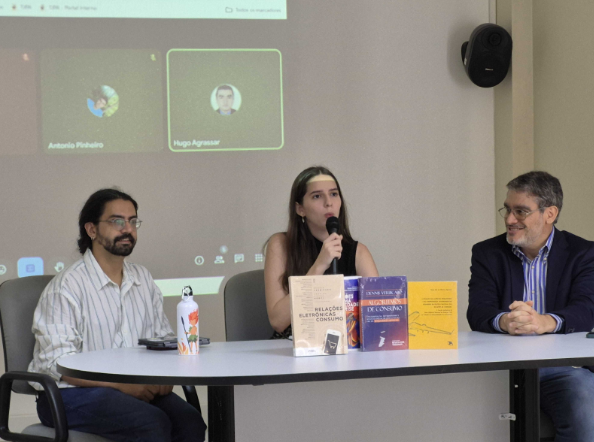
On November 14, 2025, Pedro Saliba, Coordinator of Power Asymmetries at Data Privacy Brasil, participated as a speaker at the event “Smart Cities, Sustainability, and Algorithmic Regulation,” organized by the Consumption and Citizenship Research Group at UFPA. The panel was part of the expanded program of the COP30 discussions and sought to explore how technology has been shaping cities, social relations, and forms of work.
During the presentation, an overview of the datafication of territories was provided, highlighting how the massive collection of data has become part of urban infrastructure and has begun to influence public policies and governance practices. The discussion emphasized how this transformation is intertwined with processes of algorithmic governance that directly impact the everyday lives of individuals and communities.
Another topic addressed was the platformization of labor and the intensification of workplace precarization, characterized by unstable schedules, lack of rights, and dependence on opaque evaluation and remuneration systems. It was also stressed that these impacts are not evenly distributed: issues of race, gender, and territory shape who becomes most vulnerable to digital technologies.
The debate also included reflections on the use of surveillance and facial recognition systems, which have deepened historical inequalities by reinforcing selective patterns of control over certain social groups — a subject that Data Privacy Brasil has worked on since its founding. Finally, the discussion briefly touched on digital colonialism, drawing attention to the growing dependence on foreign platforms and technological infrastructures, especially in the management of sensitive data.
The event offered a valuable opportunity to critically reflect on the future of cities and the challenges of building truly inclusive and democratic urban environments in a context of increasing digitalization. The exchange among researchers, students, and activists reinforced the importance of expanding this debate and ensuring that technology serves the cause of social justice.
The session was the result of years of consolidated research on datafication and social justice. Below are some of our highlights:
- AI and public security datification: field building for fundamental rights safeguards – Data Privacy Brasil Research
- New frontiers of digital law – Data Privacy Brasil Research
- AI with Rights – Data Privacy Brasil Research
- Amplifying Global South Voices in Digital Rights Policymaking – Data Privacy Brasil Research
DataPrivacyBr Research | Content under licensing CC BY-SA 4.0