
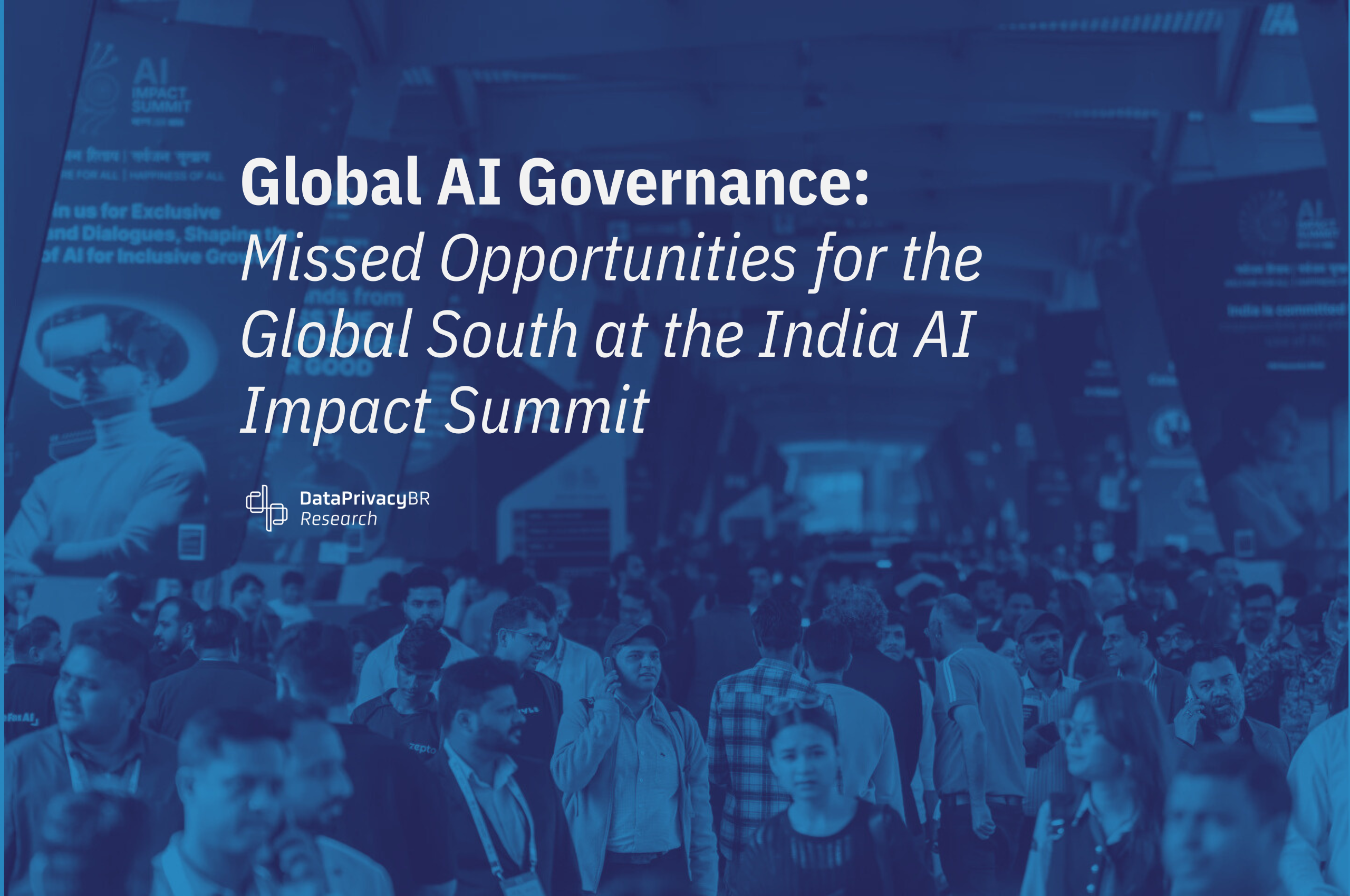
Global AI Governance: Missed Opportunities for the Global South at the India AI Impact Summit
The India AI Impact Summit generated significant expectations, particularly because it was the first edition hosted in the Global South. India’s leadership created hope that the Summit could reposition global AI governance debates by centering the priorities of developing countries, strengthening South-South coordination, and advancing greater alignment with ongoing multilateral initiatives. However, by the conclusion of the Summit, many of these expectations had not been fulfilled.
The event largely reproduced patterns seen in previous editions: low levels of institutionalization, limited clarity on implementation pathways, and final declarations without binding commitments. The Summit maintained a fragmented approach, with discussions continuing to prioritize innovation and future risks over the pressing structural needs of the Global South.
Beyond these substantive imbalances, a major shortcoming of the Summit was the limited space for meaningful participation by civil society and academic institutions from the Global South. Despite the references to multistakeholderism, no structured mechanisms ensured that civil society contributions would inform the negotiated texts or outcomes. Ahead of the Summit, the Global South Alliance (GSA) sent a letter advocating for stronger and more institutionalized participation, yet these recommendations were not reflected in the Summit’s approach.
On the other hand, the AI Impact Summit was dominated by a focus on government-Big Tech partnerships and industrial policy, framed by Indian Prime Minister Narendra Modi’s ambition to use AI to “supercharge” economic growth. This corporate-government synergy was on full display as tech giants used the platform to showcase strategic investments aimed at the Global South, featuring headline-grabbing commitments like Google’s $15 billion and Microsoft’s $17.5 billion for AI infrastructure. The event’s industrial policy focus was further underscored by India’s creation of substantial tax incentives for datacenters, coupled with a notable distance from global AI governance discussions as star leaders like Sam Altman and Sundar Pichai dominated local media narratives. Also, the broader geopolitical context was set by the US-India “Pax Silica” technology agreement, which strengthens ties between India and US tech companies.
Amid this scenario, some stakeholders pushed the discussion towards a global governance of AI, as Brazil, which sent an extensive delegation to the summit. In his speech, President Luiz Inácio Lula da Silva was firm in highlighting the risks associated with the use of AI systems, such as autonomous weapons, hate speech, disinformation, violence against women and girls and other threats to democracies. Brazil also referred to existing governance initiatives, emphasizing the UN’s role as the main center for AI governance, especially through initiatives defined in the Global Digital Compact, such as the International Independent Scientific Panel on AI. The speech also nodded to other fora, mentioning the 2025 BRICS declaration on AI, from Brazil’s presidency, which also recognizes the UN’s coordinating role in this sphere, warning that without collective action, AI will deepen historical inequalities, as computational capabilities and data remain concentrated in a few actors.
The event’s final Declaration is predictable, in line with what was already expected in terms of a lack of concreteness and more effective commitments among countries. The document presents itself as reflecting the views of participants from countries and international organizations, and even highlights the importance of multistakeholder engagement, something that contradicts the very organization of the Summit. By citing only a few examples of existing non-binding initiatives, the Declaration fails even to acknowledge the outcomes of working groups created within its own framework, such as the security group co-chaired by Brazil and Japan. The document also emphasizes respect for national sovereignty, a strong hallmark of the Indian government throughout the week of the event and, naturally, of its technology-related policies.
The next AI Summit is scheduled to take place in 2027 in Switzerland, as announced at the event by Swiss Ambassador Thomas Schneider. His remarks struck a more optimistic tone regarding stakeholder inclusion and coordination with existing initiatives in other multilateral fora. Moreover, Switzerland has already signaled a more concrete intention to work toward binding conventions, such as the Vilnius Convention on Artificial Intelligence, Human Rights, Democracy and the Rule of Law, of the Council of Europe (the first-ever international legally binding treaty in this field). Expectations are that the Convention may be expanded to additional countries, fostering a shared and interoperable vision while still allowing for coexistence with each country’s own regulatory frameworks.
With 2026 only just beginning, and with expectations surrounding “new AI governance spaces” such as the UN Independent Scientific Panel and the UN Global Dialogue, there is hope that these processes will help strengthen a multilateralism that is currently weakened, and enable truly multistakeholder participation on equal footing, where Human Rights, and not only industrial policy, are prioritized. With leading countries like the United States against a global governance framework within the United Nations, the challenge will continue, and expectations will grow to “alternative countries” like India, Brazil and Switzerland, that, despite not having great AI power, try to strengthen frameworks of governance and regulation to level the playing field.
Veja também
-
The Data Trilemma: Sovereignty, Interoperability, and Economic Regulation
On August 13, Data Privacy Brasil, in partnership with the Diplo Foundation, held the panel “The Data Trilemma: Sovereignty, Interoperability, and Economic Regulation” during CPDP Latam. This blog post not only presents the discussions held during the panel, but also expands on some of the complex issues raised during the conversation at the event, such as digital sovereignty, Brazil’s current position in the international landscape, and some possible paths forward for the country.
-
Data Privacy Brasil Contributes to the Progress Report of the UN’s Data Governance Working Group
Data Privacy Brasil submitted comments to the zero draft of the Progress Report of the United Nations Commission on Science and Technology for Development’s Working Group on Data Governance at All Levels as Relevant for Development, where we participate as an observer. Our comments are grounded in our work committed to building a fair information ecosystem, promoting data justice and addressing the structural asymmetries that shape digital governance from local to the global level.
-
Data Privacy Brasil Contributes to the Progress Report of the UN’s Data Governance Working Group
Data Privacy Brasil submitted comments to the zero draft of the Progress Report of the United Nations Commission on Science and Technology for Development’s Working Group on Data Governance at All Levels as Relevant for Development, where we participate as an observer. Our comments are grounded in our work committed to building a fair information ecosystem, promoting data justice and addressing the structural asymmetries that shape digital governance from local to the global level.
-
Data Privacy Brasil Participates in the First United Nations Global Dialogue on AI Governance
On 6-7 July 2026, the first United Nations Global Dialogue on AI Governance (UNGD) will take place in Geneva, Switzerland. Data Privacy Brasil will participate alongside partners from the Global South and Global North, as well as representatives from civil society, governments, and international organizations. Together with the Global South Alliance, we have established a set of shared priorities, which can be read here. At the institutional level, we will focus on three key priorities to bring to the Dialogue.
-

Agenda-setting and networked influence in digital policy: lessons from the Brazilian G20 Presidency
In 2024, Brazil assumed the G20 presidency amid high expectations for advancing the global digital agenda, especially among governments, digital rights advocates, and stakeholders from the Global South. Drawing from Data Privacy Brazil's work on leading the Inclusive Digital Transformation taskforce of the T20, together with the Observer Research Foundation, we reflect on the G20's impact, especially its influence on emerging global discourses and networks.
-
The Participation Challenge Facing the UN Global Dialogue on AI
As discussions on global AI governance accelerate, the United Nations has emerged as one of the few institutions with the political legitimacy to convene governments, civil society, academia, and the private sector around a shared agenda. In a fragmented geopolitical landscape increasingly shaped by competing national AI strategies and corporate concentration (as seen in past “AI Summits”), the UN’s effort to create the Global Dialogue on AI is both necessary and timely.
-
Datafication and Democracy Fund awards new round of Global South projects on infrastructure, inclusion, and democratic accountability
The Datafication and Democracy Fund Committee, composed of Data Privacy Brasil, Paradigm Initiative, and Aapti Institute, is pleased to announce the organizations awarded funding for short-term research and advocacy projects under the Fund’s second edition. It was a lengthy, highly competitive selection process, with more than 80 proposals submitted from across the Global South.
-
From Participation to Agenda-Setting: lessons for the next global AI Summit
The recent global discussions around artificial intelligence governance have revealed both the urgency of the topic and the limitations of the processes currently shaping it, as we have witnessed with the AI Impact Summit in New Delhi. As preparations move toward future milestones, particularly the planned Swiss AI Summit in 2027, it is essential to […]
Veja Também
-
The Data Trilemma: Sovereignty, Interoperability, and Economic Regulation
On August 13, Data Privacy Brasil, in partnership with the Diplo Foundation, held the panel “The Data Trilemma: Sovereignty, Interoperability, and Economic Regulation” during CPDP Latam. This blog post not only presents the discussions held during the panel, but also expands on some of the complex issues raised during the conversation at the event, such as digital sovereignty, Brazil’s current position in the international landscape, and some possible paths forward for the country.
-
Data Privacy Brasil Contributes to the Progress Report of the UN’s Data Governance Working Group
Data Privacy Brasil submitted comments to the zero draft of the Progress Report of the United Nations Commission on Science and Technology for Development’s Working Group on Data Governance at All Levels as Relevant for Development, where we participate as an observer. Our comments are grounded in our work committed to building a fair information ecosystem, promoting data justice and addressing the structural asymmetries that shape digital governance from local to the global level.
-
Data Privacy Brasil Participates in the First United Nations Global Dialogue on AI Governance
On 6-7 July 2026, the first United Nations Global Dialogue on AI Governance (UNGD) will take place in Geneva, Switzerland. Data Privacy Brasil will participate alongside partners from the Global South and Global North, as well as representatives from civil society, governments, and international organizations. Together with the Global South Alliance, we have established a set of shared priorities, which can be read here. At the institutional level, we will focus on three key priorities to bring to the Dialogue.
-
Agenda-setting and networked influence in digital policy: lessons from the Brazilian G20 Presidency
In 2024, Brazil assumed the G20 presidency amid high expectations for advancing the global digital agenda, especially among governments, digital rights advocates, and stakeholders from the Global South. Drawing from Data Privacy Brazil's work on leading the Inclusive Digital Transformation taskforce of the T20, together with the Observer Research Foundation, we reflect on the G20's impact, especially its influence on emerging global discourses and networks.
-
The Participation Challenge Facing the UN Global Dialogue on AI
As discussions on global AI governance accelerate, the United Nations has emerged as one of the few institutions with the political legitimacy to convene governments, civil society, academia, and the private sector around a shared agenda. In a fragmented geopolitical landscape increasingly shaped by competing national AI strategies and corporate concentration (as seen in past “AI Summits”), the UN’s effort to create the Global Dialogue on AI is both necessary and timely.
-
Datafication and Democracy Fund awards new round of Global South projects on infrastructure, inclusion, and democratic accountability
The Datafication and Democracy Fund Committee, composed of Data Privacy Brasil, Paradigm Initiative, and Aapti Institute, is pleased to announce the organizations awarded funding for short-term research and advocacy projects under the Fund’s second edition. It was a lengthy, highly competitive selection process, with more than 80 proposals submitted from across the Global South.
-
From Participation to Agenda-Setting: lessons for the next global AI Summit
The recent global discussions around artificial intelligence governance have revealed both the urgency of the topic and the limitations of the processes currently shaping it, as we have witnessed with the AI Impact Summit in New Delhi. As preparations move toward future milestones, particularly the planned Swiss AI Summit in 2027, it is essential to […]
-
AI Summit: Brazil and India on different moves?
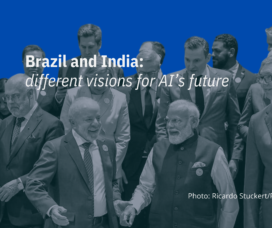
One of the most notable dynamics in the opening days of the AI Impact Summit (February 16–19) has been the contrast between the address delivered by Brazil’s President, Luiz Inácio Lula da Silva, and the posture adopted by India’s Prime Minister, Narendra Modi, regarding the future of global AI governance.
-

Data Privacy Brasil Joins the UN System with ECOSOC Consultative Status
Data Privacy Brasil has a strong track record of engagement in international processes, including those within the United Nations system. Now, in 2026, it officially becomes part of this system: we are an organization with consultative status with ECOSOC.
-

What to expect from the India AI Impact Summit
During the week of February 16–20, Data Privacy Brasil will participate in the India AI Impact Summit in New Delhi. This is yet another “AI Summit,” an event now in its fourth edition, which each year is hosted by a different country and shaped by a unique framework. It is an opportunity for each host country to place its own agenda and priorities in the spotlight within the highly contested field of global artificial intelligence governance.
-
Global South Alliance at the AI Impact Summit
In February 2026, New Delhi will host the AI Impact Summit, one of the leading global forums on artificial intelligence governance. Organized by the Indian government, the Summit builds on earlier high-level initiatives such as the AI Safety Summit (Bletchley Park, 2023), the AI Seoul Summit (2024), and the AI Action Summit (Paris, 2025). Although […]
-
The Road to WSIS+20: Reflecting on Brazil’s positions and the international process of the WSIS+20 review
During 2025, Data Privacy Brasil engaged in an important process of the United Nations for global digital governance: the 20-year review of the World Summit on Information Society (WSIS). The first part of this engagement was translated into the report The Road to WSIS+20: Key Country Perspectives in the Twenty-Year Review of the World Summit on the Information Society, coordinated by Global Partners Digital and Global Network Initiative. Our team followed the Brazilian engagement through the process, also contributing with government delegates and other stakeholders.
-
Centering human rights in the design and adoption of DPIs: Perspectives on DPI design, adoption and implementation
Members of the Global South Alliance joined the Global Digital Public Infrastructure (DPI) Summit, convened from November 4 to 6, 2025, at the Cape Town International Convention Centre in South Africa. The theme of the event was “Digital Public Infrastructure in Practice: Implementing Tomorrow’s Digital Society Today.” The summit was co-hosted by the World Bank […]
-

The Global DPI Summit: reframing the debate from a Global South perspective
This November, the Global DPI Summit will bring together powerful actors to champion Digital Public Infrastructure (DPI) as an opportunity for development, which demands critical thinking and not only a promotional approach. Organized by Co-Develop, the International Telecommunication Union (ITU), the United Nations Development Programme (UNDP), the UN Office of Digital and Emerging Technologies, and […]
-
Artificial Intelligence in Focus: A Comparative Analysis of the BRICS and FOC Declarations on AI Governance
The BRICS Leaders' Declaration on Global Governance of Artificial Intelligence has gained prominence in both Brazilian and international media, as it represents a joint position by Global South countries in the ongoing contest over this emerging technology.
-
How do we build for the Global South?
We live in a world of digital divides. The Global South represents 88 percent of the world’s population and has a higher number of internet users, yet it remains under-served by digital technology. Check out the full article on our website.
-
The Road to WSIS+20: Key Country Perspectives in the Twenty-Year Review of the World Summit on the Information Society
This report aims to support engagement in the WSIS+20 process by providing insight into the positions and priorities of selected governments.
-
The Global South Alliance welcomes 13 new members
The Global South Alliance is a coalition formed in 2022 with the mission of unifying NGOs dedicated to the promotion of mutual learning and the advancement of digital rights with a perspective from the Global South. In May, the Global South Alliance welcomed 13 new members, reaching the total number of 26 organisations.
-

Job Opening: Digital Librarian
The Data Privacy Brasil makes the notice public with registrations until July 11th.
-
Report | Digital Identity and Digital Public Infrastructure: recommendations for a fair information architecture
Data Privacy Brasil launches its new report entitled “Digital Identity and Digital Public Infrastructure: recommendations for a fair information architecture”. The study examines the impact of a Digital Public Infrastructure (DPI), especially digital identity applications, on the protection of personal data in light of the Brazilian Federal Constitution (CF) and the General Data Protection Law (LGPD).
-
Five-Point Plan for an Inclusive WSIS+20 Review
As stakeholders engaged in the WSIS+20 Review process, organizations sign the petition presenting recommendations to help operationalize the WSIS+20 review modalities in order to ensure transparency, inclusion, and meaningful stakeholder engagement.
-

Data Privacy Brasil contributes to preparations for the World Summit for the Information Society high-level event
The event, which is co-organized by the ITU, UNESCO, UNDP, and UNCTAD, takes place in July, and this March, stakeholders were able to send their suggestions regarding the format and content to be debated, especially in light of the review process.
-

Data Privacy Brasil goes to the Digital Rights and Inclusion Forum (DRIF)
For the third consecutive year, Data Privacy Brasil will participate in the Digital Rights and Inclusion Forum (DRIF). DRIF – formerly known as the Internet Freedom Forum (IFF) – is an annual forum organized by Paradigm Initiative (PIN), since 2013, to be a space for discussions on global issues related to digital rights and inclusion.
-
Global South Alliance unveils digital library and opens membership applications
The GSA invites organizations to express their interest in joining the network by completing the application form available until April 24.
-
Abstract submissions now open for T20 South Africa
The Think20 South Africa invites researchers from around the world to contribute to a dynamic exchange of ideas on today's most pertinent challenges. The deadline for submitting abstracts is February 10, 2025.
-

G20: stocktaking of 2024 and outlook for 2025 for justice and data governance
In 2024, Data Privacy Brasil took on a new and exciting challenge: participating in the G20 ecosystem, during the Brazilian presidency, through the official engagement group for think tanks, Think 20 (T20). Check out the text to learn more about Data's work at the G20.
-
DIRECT Learning Series: Advocating for Independent Regulators
The 6th workshop took place on November 6th, 2024, in the context of the Data Rights and Enforcement through Community Trust (DIRECT) Learning Series, an ongoing thematic series of workshops with members of the DIRECT consortium, supported by Internews.
-

Exploring Opportunities in the Digital Economy and AI at the G20
The task force 5 of T20 Brasil has engaged several international think tanks to provide ideas and policy proposals on crucial areas of technological development, such as AI and Digital Public Infrastructures. This includes encouraging G20 nations to adopt policies that protect individual rights while fostering innovation.
-

DIRECT Learning Series: data protection training and capacity building
The 5th workshop took place on October 2nd, 2024, in the context of the Data Rights and Enforcement through Community Trust (DIRECT) Learning Series, an ongoing thematic series of workshops with members of the DIRECT consortium, supported by Internews.
-
Empowering Democracy through Data: preliminary project reports from the DDF
The Global South Alliance wil host its next open meeting on October 22, 2024, where grantees from the first cohort of the Datafication and Democracy Fund (DDF) will present their impactful research.
-

Protean acknowledged for leadership in digital public infrastructure
A report from Data Privacy Brasil underscores how DPI can be leveraged to create environments where data privacy and security are prioritized.
-

DIRECT Learning Series: strategies for meaningful engagement in the context of implementation of Digital ID systems
This workshop took place on August 28th, 2024, in the context of the Data Rights and Enforcement through Community Trust (DIRECT) Learning Series, an ongoing thematic series of workshops with members of the DIRECT consortium, supported by Internews.
-
G20 Engagement Groups Issue Joint Declaration on Artificial Intelligence
On Tuesday (10), the main G20 engagement groups, including Civil 20 (C20), Labor 20 (L20), Think 20 (T20) and Women 20 (W20), announced a groundbreaking joint statement on the ethical, sustainable and inclusive development and deployment of artificial intelligence (AI).
-
Empowering Democracy through Data: Preliminary Project Reports from the Datafication and Democracy Fund
The Global South Alliance held its first meeting with the organizations covered by the Datafication and Democracy Fund. On the occasion, each of the five organizations - Like a Palm Tree (Africa), Center of Security and Citizenship Studies (LatAm), Corporación Cambio Sostenible (LatAm), Criminal Justice & Policy Accountability Project (India), and Ikigai Innovation Initiative (Africa) - had the opportunity to present the preliminary results of their projects and hear feedbacks from the GSA members.
-
CSOs and Governments Meeting on the Global South Digital Agenda
On September 21st and 24th, the event “Open Dialogue: Global South Alliance and Governments for an Inclusive Digital Agenda” will take place, promoted by the organizations Data Privacy Brasil, Aapti Institute, Paradigm Initiative and PCC (The New School). The event aims to provide an open conversation with diplomats about the international agenda for IPRs, AI, GDC implementation and G20 continuity.
-
How to build a joint and inclusive digital identity? Laying the foundations for a citizen ID
Do you know what an identity is? Thinking about facilitating access to the topic, Data Privacy Brasil has developed a series of content to provide the foundations and tools possible for all the details on the subject. With this, we will be able to discuss, as a community, what we want with a digital identity and how we can achieve it.
-
Inclusive Digital Transformation: check out the declaration with recommendations to the G20
In the document, six priorities were defined to deal with issues such as digital inclusion and meaningful universal connectivity; and challenges, opportunities and governance of artificial intelligence.
-
Leveraging DPI for Safe and Inclusive Societies
Aapti and Data Privacy Brasil have submitted their contribution to the Office of the United Nations Secretary-General's Envoy on Technology (OSET) and the United Nations Development Programme (UNDP) regarding the report "Leveraging DPI for Safe and Inclusive Societies".
-
T20 and C20 launch “Joint Declaration of Convergence Dialogue”
On the 2nd and 3rd of July, a Mid-Term Conference took place in Rio de Janeiro, a T20 event with the participation of leaders from national and international think tanks, members of academia, representatives of the private and public sectors and civil society to discuss and propose solutions to the main global challenges.
-
Datafication and Democracy Fund welcomes five organizations from the Global South for short-term projects
The Datafication and Democracy Fund Committee, composed of Data Privacy Brasil, Paradigm Initiative, and Aapti Institute, is pleased to announce the five organizations awarded funding for a short-term research project.
-
Position on the Global Digital Compact and the Summit of the Future
Between the 9th and 10th of May, the UN Civil Society Conference is happening in Nairobi. The event is presented as an opportunity to engage civil society in preliminary discussions ahead of the Summit of the Future.
-
Data Privacy Brasil and Global South Alliance participate in NETmundial+10
Between April 29th and 30th, the NETmundial+10 took place in São Paulo. Building upon the event and the NETmundial Declaration of 2014, this event focused on strengthening global multistakeholder governance for the Internet and digital technologies, as well as conveying messages to global actors for better coordination of various ongoing processes.
-
Data Privacy Brazil participates in the inaugural event of the T20
Between March 4th and 6th, the Organizing Committee of T20 Brazil - composed of CEBRI, FUNAG, and IPEA - held the first official event of the engagement group. The event took place entirely virtually and was openly broadcast to the public.
-
Inclusive Digital Transformation in the T20
The year 2024 marks Brazil's presidency in the G20, the group of the world's largest economies, chaired by our country for the first time. It is a year of great opportunity for Brazil to influence a broad global governance agenda, prioritizing issues such as inequality, climate change, and, of course, digital transformations.
-
Data Privacy Brasil, Paradigm Initiative and Aapti Institute announce the launch of the “Datafication and Democracy Fund”
The fund aims to finance activities that strengthen the work of NGOs in the Global South on issues of datafication and democracy
-
Recentering User Needs in Digital Financial Infrastructures: The Global South Way
Through India’s G20 leadership in 2023, global agendas of digital transformation and financial growth have come to be intimately reoriented to challenges, priorities and special developments in the Global South.
-
At UNCTAD eWeek, Data Privacy Brasil will discuss the intersection between digital economy and human rights in AI regulation
The UNCTAD eWeek, an initiative of the United Nations Conference on Trade and Development (UNCTAD) in partnership with eTrade for all, will occur from the 4th until the 8th of December.
-
Empowering the Global South: Seizing the Opportunity for Digital Rights Governance in G20 and Beyond
The G20 represents a critical policy space for addressing emergent challenges on a global scale and its importance as a platform is pronounced when we consider its significance for the Global South.
-
The intersection between AI regulation in the South and digital trade clauses involving source code and algorithms
Recap of Session 43 of the WTO’s 2023 Public Forum organized by Data Privacy Brasil and REBRIP
-
Research highlights Global South engagement in digital rights policy making
The Data Privacy Brasil Research Association announces the launch of the research report on Global South perspectives on international engagement in digital rights.
-
At the WTO Public Forum, Data Privacy Brasil and REBRIP will discuss the intersection between AI regulation and digital trade commitments involving source code and algorithms.
The WTO Public Forum 2023 will take place between September 12th and 15th in Geneva.
-

Data Privacy Brasil’s contribution to the Thematic Deep Dive of Artificial Intelligence and other Emerging Technologies of the Global Digital Compact
As other civil society organizations already pointed out, notable preference was given to the speech of Member States, UN agencies, and the private sector, at the expense of human rights civil society organizations, which prevented the speech that had been prepared by the DBPR and other civil society stakeholders.
-
Southern Alliance for the Global Digital Compact
Responding to the call made by the United Nations, the Data Privacy Brazil Research Association, together with organizations from the Global South, presents a contribution to the Global Digital Compact.
-

Data Privacy Brasil Research Association contributes to UN open call on the relationship between human rights and technical standard-setting processes
We received a call as an opportunity to submit suggestions to inform the OHCHR report on the relationship between human rights and standard-setting processes for new and emerging digital technologies.
-
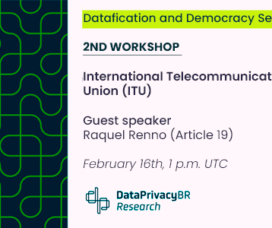
Our second workshop of a series about technical forum talks about the International Telecommunications Union
In the second meeting of the Datafication and Democracy Workshop Series, we received Raquel Renno, Digital Programme Officer of Article 19, who spoke about the International Telecommunication Union (ITU) for third sector organizations.
-
Let’s stay tuned for the Global Digital Compact
What is the Global Digital Compact and why is it important to keep an eye on it?
-

Why should we all pay attention to the Brazilian Digital ID system?
The implementation of digital identity systems is increasing around the world, especially in Global Southern countries. The model widely adopted is known as Big ID, promoted by or linked to public administration bodies which use centralized biometric databases to identify and authenticate citizens (Access Now, 2021).

DataPrivacyBr Research | Content under licensing CC BY-SA 4.0